Free roofing template · No sign-up to download
Roofing Scope of Work Template (Free PDF)
Print it, fill in the blanks, and hand the same scope to every roofer — so their bids cover the same work and you can actually compare them.
Covers tear-off, decking, underlayment, flashing, ventilation, cleanup, warranty, and exclusions.
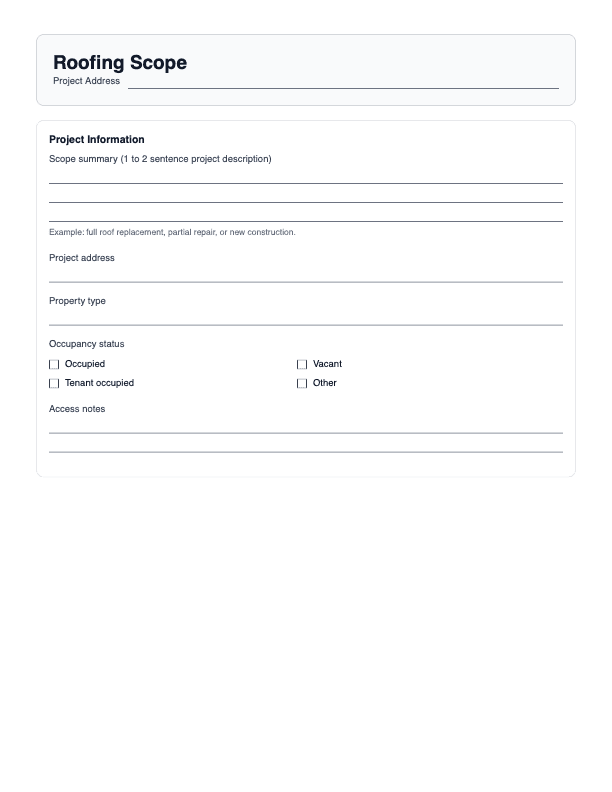
3 pages · Fill-in lines · Checkboxes
What This Roofing Template Includes
ScopeCraft for Homeowners: practical tools to plan your roofing project and request comparable contractor bids—not a generic download site.
- Printable fill-in roofing scope of work PDF for repairs and full replacements
- Sample ScopeCraft-generated roofing scope showing a complete homeowner-ready document
- Checklist covering tear-off, underlayment, flashing, ventilation, decking, and cleanup
- Guidance on the details that most often cause roofing bid variance and change orders
Roofing Scope Example PDF
Real ScopeCraft output — clear scope, materials, and install detail, ready to send a roofer for a bid.
Sample document
Open full PDFFree Roofing Scope Template PDF
Free printable roofing scope template to help you get accurate, comparable bids. Fill this out and give the same scope to every contractor—so you're comparing the same work.
Roofing Scope of Work
3 pages · Fill-in lines · Checkboxes for common decisions
- Project info, access notes, occupancy
- Tear-off, decking, underlayment, flashing, ventilation
- Materials, cleanup, open items, contractor notes
- Space for contractor bid and homeowner sign-off
Questions to Answer Before Requesting Bids
Homeowners get cleaner roofing bids when these decisions are in the scope before contractors price the job. Use the checklist below for detail; start with these high-impact questions.
- Full tear-off or overlay—and how many existing layers come off?
- Shingle or material brand, profile, color, and warranty tier?
- How will damaged decking be handled: allowance, unit price, or included?
- What flashing, drip edge, ice-and-water shield, and ventilation details are included?
- Who handles permits, inspections, disposal, and jobsite protection?
- What is excluded: gutters, skylights, chimney work, or structural repairs?
ROOFING BASICS
Roofing Scope Checklist
Before requesting roofing bids, make sure your scope clearly covers the items below. This is what helps contractors price the same work—and helps you compare bids more accurately.
Removal
- Full tear-off or overlay
- Number of existing roof layers
- Disposal of removed materials
Decking
- Whether damaged decking is replaced
- Whether replacement is billed by allowance or unit price
Underlayment and Ice/Water Protection
- Type of underlayment
- Ice and water shield locations
Flashing and Edges
- Flashing at valleys, penetrations, and transitions
- Drip edge scope
- Whether existing flashing is reused or replaced
Ventilation
- Ridge, box, or soffit vent scope
- Whether ventilation changes are included
Roofing Material
- Roofing material type
- Manufacturer or product line if known
- Color or finish if selected
Cleanup and Protection
- Site protection during work
- Cleanup expectations
- Final debris removal
Exclusions / Open Items
- What is not included
- Any items still to be finalized before contract
If these details are missing, contractors will fill in the gaps with their own assumptions—and that’s when bids stop being easy to compare.
Common Missing Details That Cause Change Orders
These gaps show up often on roofing projects when homeowners request bids without a complete scope. Define them upfront to reduce mid-project price increases.
- Tear-off depth and disposal not specified
- Decking replacement priced as “as needed” without a unit rate or allowance
- Ventilation system type and quantity left for the contractor to decide
- Flashing details at walls, chimneys, and penetrations omitted
- Ice-and-water shield coverage area not defined
- Warranty scope (materials vs. workmanship) not spelled out
Why Roofing Bids Vary So Much
When the scope is vague, contractors fill in the gaps with their own assumptions. That is why prices drift and bids get hard to compare.
A clear roofing bid scope keeps contractors pricing the same work.
Roofing Scope Tips
Replacement (tear-off)
Existing roof comes off, then the new roof goes on. Most residential projects fall here.
- Tear-off is part of the scope
- Decking repairs may affect price
New construction
The structure is new and the decking is already exposed, so there is no tear-off.
- Decking is usually handled before roofing starts
- Dry-in timing and inspections matter more
Practical tips
- If you're supplying materials, consider a supplier that delivers to the roof to reduce labor and handling.
- Ventilation and drip-edge details are often finalized with the contractor unless you already know the exact system.
- Define how damaged decking will be handled (allowance vs. unit price) to avoid surprises.
Use This Scope to Compare Contractor Bids
Send the same roofing scope to every contractor, then compare bids line by line. ScopeCraft helps homeowners generate the scope, collect bids against it, and catch missing items before you award the job.
- Send one scope document to every roofing contractor
- Compare inclusions, exclusions, and allowances line by line
- Flag missing items before you sign—not after demo starts
How I Learned the Hard Way
When I first asked for roofing bids, I sent over plans and got numbers that were all over the place. The problem was not the contractors. It was the scope. Once I understood that, it became clear that better bids start with giving everyone the same clear document.
Roofing Scope Template FAQ
What is a roofing scope of work template?
A roofing scope of work template outlines the work, materials, tear-off plan, flashing, ventilation, and exclusions for a roof project. Homeowners use it so every contractor bids the same repair or replacement—not a different version of the job.
How is a scope of work template different from a scope generator?
A template is a PDF you fill in manually. ScopeCraft’s scope generator asks homeowners guided questions about tear-off, materials, decking, and ventilation, then produces a structured roofing scope document ready to send to contractors.
Why should every contractor bid the same roofing scope?
When each contractor assumes different tear-off, decking, or ventilation details, bids become hard to compare. A shared scope of work lets homeowners see real price differences instead of gaps in what each quote includes.
What causes roofing change orders after the job starts?
Change orders often come from undisclosed decking damage, unclear tear-off scope, added ventilation requirements, or flashing work discovered mid-project. Defining these items upfront in the scope reduces surprises for homeowners.
Can I download this roofing scope template as a PDF?
Yes. Download the free printable roofing scope template PDF from this page and send the same completed document to every contractor when you request bids.
Build a scope for your roofing project
ScopeCraft for Homeowners walks you through a short questionnaire and puts together a scope document you can send to contractors—then compare bids against the same scope.
- Guided questions — takes about 10 minutes
- Outputs a structured scope contractors can price
- Compare bids and catch missing scope before you sign