Free decking template · No sign-up to download
Decking Scope of Work Template (Free PDF)
Print it, fill in the blanks, and send the same scope to every deck contractor — so their bids cover the same work and you can compare them clearly.
Covers deck size, framing, decking material, railings, stairs, footings, demolition, cleanup, and exclusions.
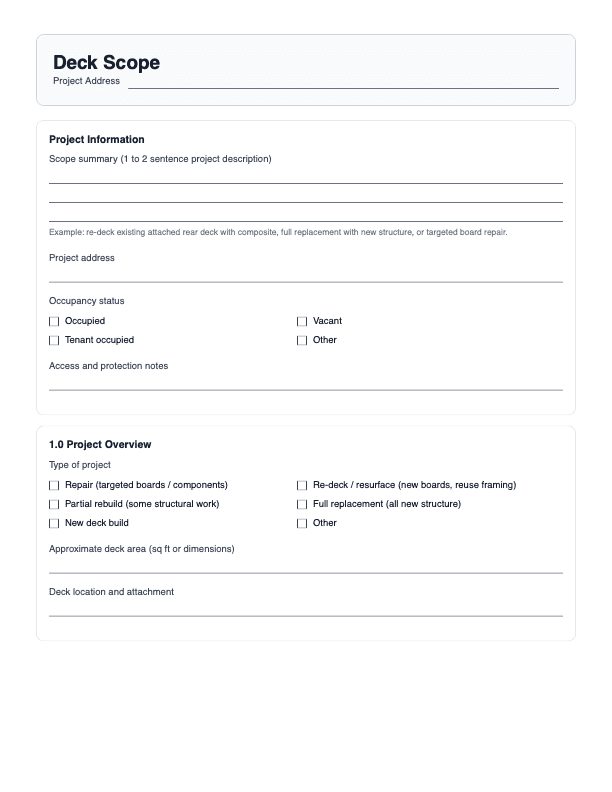
4 pages · Fill-in lines · Checkboxes
What This Deck Template Includes
ScopeCraft for Homeowners: practical tools to plan your deck project and request comparable contractor bids—not a generic download site.
- Printable fill-in deck scope of work PDF for new builds and replacements
- Sample ScopeCraft-generated deck scope with structural and finish details
- Checklist covering footings, ledger, framing, decking, rails, stairs, and permits
- Guidance on deck scope gaps that lead to bid variance and change orders
Deck Scope Example PDF
Sample ScopeCraft output: components, board material, framing reuse, railing and stair details, hidden-structure handling, and exclusions, ready to send a deck contractor for a bid.
Sample document
Open deck example PDFFree Deck Scope Template PDF
Free printable deck scope template to help you get accurate, comparable bids. Fill this out and give the same scope to every contractor so everyone is pricing the same deck building or repair work.
Deck Scope of Work
4 pages · Fill-in lines · Checkboxes for common decisions
- Project info, deck area, and component list
- Board material, framing reuse, ledger, and footings
- Rails, stairs, 811 locate, hidden-structure handling
- Space for contractor bid and homeowner sign-off
Questions to Answer Before Requesting Bids
Homeowners get cleaner deck bids when these decisions are in the scope before contractors price the job. Use the checklist below for detail; start with these high-impact questions.
- New deck, resurfacing, or full replacement—and what existing structure stays?
- Decking material, board pattern, fascia, and stair details?
- Footing type, depth, and attachment to the house (ledger, brackets, flashing)?
- Railing height, infill type, and code requirements for your jurisdiction?
- Who pulls permits, handles inspections, and coordinates utility locates?
- What is excluded: lighting, pergola, staining, or landscaping repair?
DECK BASICS
Deck Scope Checklist
Before requesting deck bids, make sure your scope spells out what is included and what is not. Board material, framing reuse, ledger and footing work, railings, stairs, and hidden-structure handling all affect the price and are easy to leave vague.
Scope Type
- Repair, re-deck, partial rebuild, full replacement, or new build
- Deck area in square feet if known
- Whether existing structure is being removed or reused
Components Included
- Deck boards, framing, ledger, railings, stairs, and landings
- Fascia boards, skirting, drainage system, and lighting
- Which components are in scope and which are excluded
Board Material
- Composite (Trex, Azek, TimberTech), PVC, pressure-treated, or cedar
- Framing lumber (typically pressure-treated regardless of surface material)
- Stain, seal, or paint inclusion for natural wood boards
Framing Reuse
- Whether existing framing is reused or fully replaced
- Contractor verification of framing condition after board removal
- Ledger attachment method and flashing at the house
Hidden Structure Handling
- What happens if damaged joists, beams, ledger, or footings are found
- Whether work stops for a separate quote or an allowance is included
- Unit-price option per joist, post, or footing
Rails, Stairs, and Code Compliance
- Code-compliant guardrails and handrails included or excluded
- Stair count, riser height, stair rail, and landing scope
- Permit responsibility and inspections if applicable
Footings and Sitework
- New footings or posts — whether excavation is required
- 811 / Dig Safe utility locate before any post or footing work
- Footing method (concrete, helical pier, surface-mount hardware)
Exclusions / Open Items
- What is not included in this scope
- Owner-supplied materials and who installs them
- Allowances for lighting, drainage, or specialty hardware
If these details are missing, contractors will fill in the gaps with their own assumptions. That is where framing-reuse assumptions, hidden-structure allowances, and railing or stair scope start causing trouble.
Common Missing Details That Cause Change Orders
These gaps show up often on deck projects when homeowners request bids without a complete scope. Define them upfront to reduce mid-project price increases.
- Ledger flashing and house attachment details not specified
- Footing depth, size, and frost-line requirements omitted
- Framing lumber spec and joist spacing left open
- Railing code compliance and infill type not defined
- Stair rise, run, and landing requirements unclear
- Permit and inspection responsibility not assigned
Why Deck Bids Vary So Much
Deck pricing depends on assumptions that every contractor makes differently when the scope is vague. Framing reuse is the most common—one contractor prices a full re-deck reusing existing joists, another assumes all-new framing. Railing and stair scope, ledger flashing, footing method, and whether a permit and inspection are required all drive large price differences on the same project.
A clear deck building scope of work keeps contractors pricing the same work and helps avoid surprise structural-repair change orders.
Deck Scope Tips
Re-deck / resurface
New boards go on over existing framing. The framing-reuse question is the single most important scope decision—contractors will disagree about what constitutes “sound” framing unless the scope defines it upfront.
- Define framing-reuse criteria or ask for a contractor verify step
- Specify hidden-structure handling before work begins
Full replacement or new deck
All new structure from footings up. New footing work triggers 811 utility-locate requirements, and permit and inspection timelines should be factored in before scheduling.
- Call 811 / Dig Safe before any footing or excavation work
- Code-compliant rail and stair details need to be in scope
Practical tips
- Composite decking costs more upfront but typically requires no stain or sealer, which reduces long-term maintenance—make sure the scope reflects whether a wood-finish coat is included or excluded for natural wood boards.
- Ledger flashing at the house connection is one of the most frequently missed scope items on deck replacements. Confirm it is included to avoid water intrusion behind the ledger.
- Define who is responsible for the permit, inspection, and any required structural engineer letter before work begins so the schedule is not held up.
Use This Scope to Compare Contractor Bids
Send the same deck scope to every contractor, then compare structural and finish line items side by side. ScopeCraft helps homeowners generate the scope, collect bids, and catch missing details before work begins.
- Send one scope document to every deck contractor
- Compare inclusions, exclusions, and allowances line by line
- Flag missing items before you sign—not after demo starts
How I Learned the Hard Way
Deck bids are one of the easiest to get wrong because so much depends on what is hidden under the boards. One contractor prices a re-deck assuming all-new framing. Another assumes reuse. A third leaves railings and stairs as separate line items that only come up after you say yes. The problem is not always the contractor. It is usually the scope.
Deck Scope Template FAQ
What is a deck scope of work template?
A deck scope of work template outlines framing, footings, ledger attachment, decking, rails, stairs, and exclusions for a deck project. Homeowners use it so every contractor bids the same build or replacement.
How is a scope of work template different from a scope generator?
A template is a PDF you complete yourself. ScopeCraft’s scope generator asks homeowners about deck size, materials, attachment, and code requirements, then produces a structured scope document for bid requests.
Why do deck bids vary so much?
Deck bids vary when footings, ledger flashing, framing spec, and railing details are undefined. A shared scope lets homeowners compare bids on real differences instead of hidden assumptions.
What deck details most often cause change orders?
Ledger repairs, footing depth changes, code-required railing upgrades, and rotted framing discovered during demo are common triggers. Spelling these out in the scope before bids reduces surprises.
Can I download this deck scope template as a PDF?
Yes. Download the free printable deck scope template PDF from this page and send the same document to every contractor when you request bids.
Build a scope for your deck project
ScopeCraft for Homeowners walks you through a short questionnaire and puts together a scope document you can send to contractors—then compare bids against the same scope.
- Guided questions — takes about 10 minutes
- Outputs a structured scope contractors can price
- Compare bids and catch missing scope before you sign